



You’re standing on the 14th tee, a tough par-4 with water on the right. Your drive on 13 was a pull. Your approach came up short. Now your hands feel heavy and your focus is starting to drift. You check your watch: three hours into the round, with four holes left to play.
This is where rounds fall apart. Not because your swing abandoned you, but because your body ran out of fuel. Golf demands sustained energy, sharp decision-making, and precise motor control for four to five hours straight. Strategic nutrition throughout the round can maintain all three from the first tee to the 18th green.
The Energy Timeline: Understanding Your Body’s Needs During a Round
A typical round lasts four to five hours. You walk six to eight miles. You perform 70 to 100 explosive movements, each requiring coordination between dozens of muscle groups. Between shots, you read greens, calculate distances, and manage course strategy. This combination of physical output and cognitive load creates unique metabolic demands.
Blood sugar fluctuations affect everything. When glucose drops, your decision-making deteriorates before you notice it. Your swing tempo changes. Your putting stroke loses its rhythm. Small errors compound.
Why Traditional Sports Nutrition Doesn’t Always Apply to Golf
Most sports nutrition advice assumes continuous moderate-to-high intensity effort: running, cycling, team sports. Golf operates differently. You alternate between explosive bursts (the swing) and extended periods of low-intensity movement (walking between shots). Your energy system never fully enters endurance mode, but it also never gets true rest.
Heavy pre-game meals that work for a football match will leave you sluggish over the ball. High-sugar sports drinks designed for cyclists can spike your blood sugar and crash it three holes later.
The Cognitive-Physical Balance Golfers Must Maintain
The physical demands of golf are real but intermittent. The cognitive demands are constant. Every shot requires calculation, visualization, and execution under self-imposed pressure. Mental fatigue degrades performance as much as muscular fatigue does, and poor nutrition accelerates both.
Pre-Round Fueling: Setting Yourself Up for 18 Holes of Success
Eat two to three hours before your tee time. This window allows digestion to complete before you start moving. The meal should combine moderate protein, complex carbohydrates, and a small amount of fat. Think oatmeal with nuts and fruit. Eggs with toast and avocado. A chicken and rice bowl if your tee time is later in the day.
Avoid high-fiber meals immediately before playing. Fiber slows digestion, which can cause discomfort when you’re bending and rotating through your swing. Save the big salad for after the round.
The Golfer’s Breakfast: What Champions Eat Before Competition
Tour professionals favor predictability. They eat the same breakfast on tournament days because they know exactly how it will affect their energy and digestion. The specifics vary, but the pattern holds: lean protein, easily digestible carbs, minimal added sugar.
Hydration starts the night before. Drink water consistently throughout the evening. If you wake up thirsty, you’re already behind. On the morning of your round, drink 16 to 20 ounces of water within an hour of waking, then sip steadily until you tee off.
On-Course Nutrition: Smart Snacking Between Holes
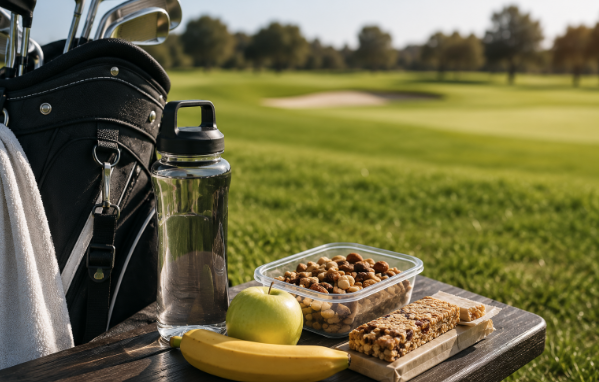
Most golfers either skip on-course nutrition entirely or rely on whatever the halfway house offers. Both approaches create problems. Skipping food leads to the mid-round crash. Grabbing a hot dog and chips at the turn introduces heavy fats and refined carbs that spike blood sugar and slow digestion.
The ideal on-course snack provides steady energy without demanding significant digestive effort. Nuts and dried fruit offer fat, protein, and natural sugars in a portable package. A banana with a handful of almonds works. So does a protein bar with whole food ingredients and minimal added sugar.
Timing matters. Do not wait until you feel hungry. By then, your blood sugar has already dropped and your performance has started to decline. Eat something small every four to five holes, starting around hole 5 or 6.
Trail Mix vs. Energy Bars: What Actually Works on the Course
Trail mix gives you control. You can portion it out, eat a handful at a time, and adjust intake based on how you feel. Energy bars vary wildly in quality. Many are candy bars with protein added. Look for bars with recognizable ingredients: nuts, dates, oats. Avoid anything with 20-plus grams of sugar unless you’re in the middle of a bonk and need rapid glucose.
The Role of Protein in Maintaining Muscle Function and Focus
Protein does more than build muscle. It stabilizes blood sugar when paired with carbohydrates, preventing the spikes and crashes that derail your focus. It also supports neurotransmitter production, which keeps your brain sharp over the back nine. Include a small amount of protein in every snack you bring to the course.
Hydration Beyond Water: Optimizing Fluid and Electrolyte Balance
Even mild dehydration impairs performance. A 2% loss in body weight from fluid deficit reduces coordination, slows reaction time, and degrades judgment. On a hot day, you can lose that much sweat before you feel thirsty.
Start each nine with a full water bottle. Drink consistently, not just when you notice thirst. Take a few sips while walking between shots. Finish one bottle by the turn and refill.
The Caffeine Question: When It Helps and When It Hurts Performance
Caffeine can sharpen focus and improve reaction time in moderate doses. It can also cause jitters, increase anxiety, and accelerate dehydration if you overdo it. If you normally drink coffee, have your usual morning cup before the round. Do not introduce caffeine on competition days if you do not use it regularly. And do not chase the afternoon energy slump with an energy drink on hole 12: you will spike, then crash harder.
On hot days, plain water is not enough. You lose sodium, potassium, and magnesium through sweat. Replace them. A pinch of sea salt in your water bottle works. So does a low-sugar electrolyte drink. Skip the neon-colored sports drinks with 30 grams of added sugar per bottle.
Recovery Nutrition: Supporting Muscle Function and Future Performance
Golf does not feel like a workout, but your body disagrees. The rotational power of the swing loads your core, hips, and shoulders. Walking 18 holes with a bag on your back taxes your legs and lower back. By the time you finish, you have depleted glycogen stores and created microtrauma in working muscles.
Recovery nutrition matters, especially if you play multiple rounds per week. Within an hour of finishing, eat a meal or snack that combines protein and carbohydrates. This supports muscle repair and glycogen replenishment. Chicken with sweet potato. A protein shake with a banana. Greek yogurt with granola.
Supplements that support golf-specific performance also belong in the conversation. Creatine monohydrate powder improves power output in the swing and supports mental clarity under pressure. Creatine is one of the most studied supplements in sports nutrition, with research showing benefits for both explosive strength and cognitive function, two pillars of consistent golf performance. A daily dose of 3 to 5 grams, taken consistently, saturates muscle stores and provides a measurable edge without side effects.
Why Weekend Warriors Need Recovery Strategies Too
You do not need to play professionally to benefit from recovery nutrition. If you play 18 holes on Saturday and again on Sunday, what you eat and drink between rounds determines how your body shows up the second day. Proper recovery reduces fatigue, maintains swing speed, and keeps your mind sharp across consecutive rounds.
Building Your Personalized Golf Nutrition Plan

No single nutrition strategy fits everyone. Body size, metabolic rate, weather conditions, and individual digestion all affect what works. Experiment during practice rounds, not in competition.
Keep a simple journal. Note what you ate before and during the round, along with how you felt at different points. Look for patterns. Did the protein bar on hole 6 keep you steady through 12? Did the sports drink on hole 9 cause a crash on 13? Adjust based on what you observe.
Weather changes the equation. Hot, humid days increase fluid and electrolyte needs. Cold rounds may require more frequent small snacks to maintain core temperature. A difficult course with long walks between greens demands more total calories than a short executive layout.
The Edge You Can Control
Equipment gets the attention. Swing changes dominate practice time. But nutrition is the variable most golfers ignore, and it costs them strokes. Fuel your body correctly and you maintain power, focus, and consistency from the first tee to the final putt